


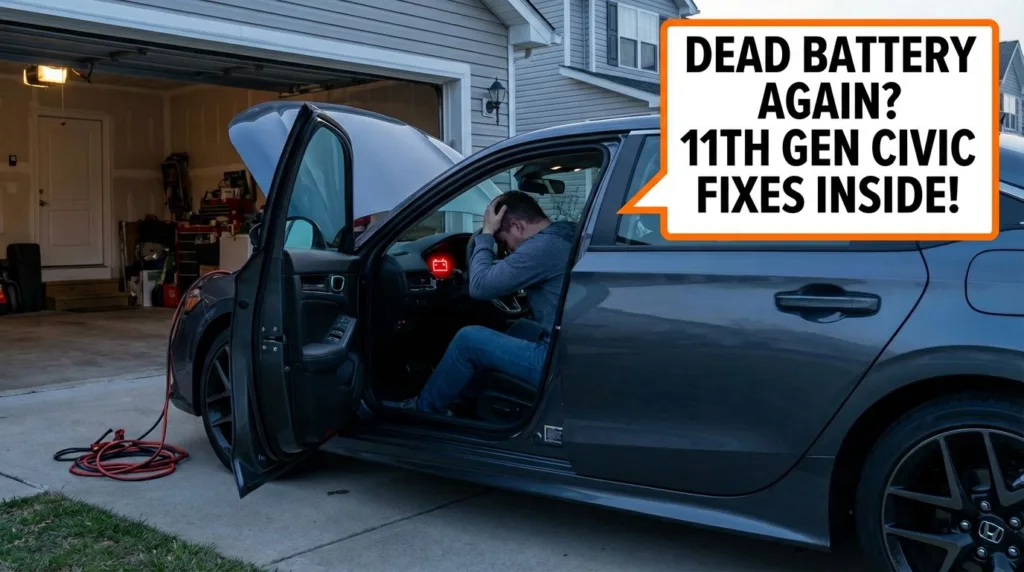
There are few things more frustrating than walking out to your relatively new, 11th-generation Honda Civic (2022-present) in the morning, only to find it completely dead. You push the start button, and… nothing.
If you are experiencing this, you are not alone. While the 11th Gen Civic is a fantastic car, a significant number of owners have reported issues with batteries draining overnight or after sitting for just a few days.
The problem often isn’t just a “bad battery”. It’s frequently a combination of complex modern electronics, specific component failures, or even just how the car is driven.
Based on reports from owners and automotive experts, we have compiled a deep dive into the specific causes of the 11th Gen Civic battery drain and their respective fixes.
The Quick-Start Guide: Civic Battery Drain Cheat Sheet
Before we dig into the details, here is a quick visual overview of the potential culprits.

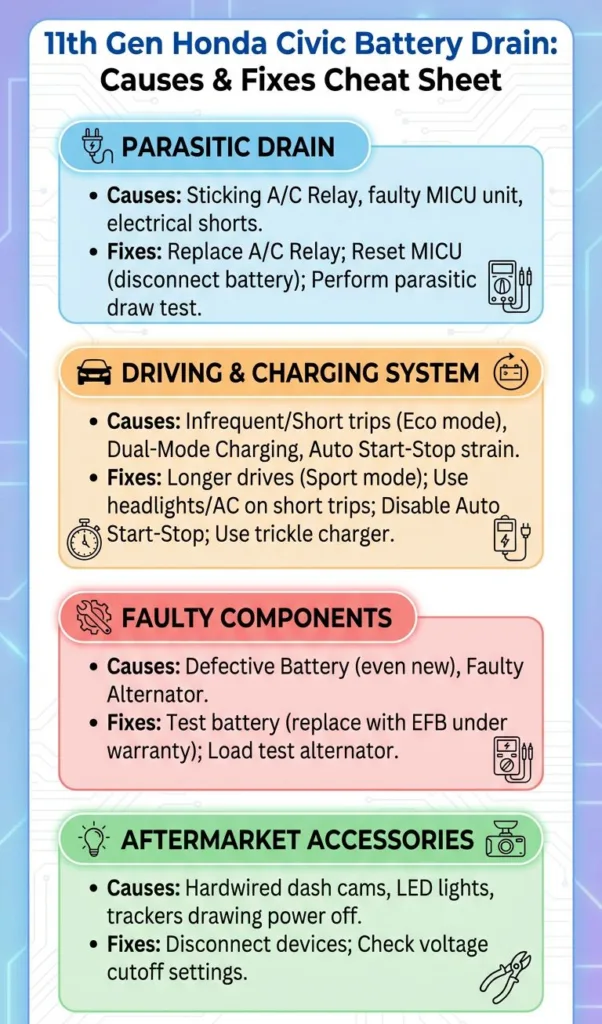
1. The “Vampire” Power Drains (Parasitic Draw)
A parasitic drain occurs when a component in your vehicle continues to draw significant power from the battery even after the ignition is turned completely off. This is the most common reason for a car dying overnight.
The Sticking A/C Relay (Very Common)
A well-known issue popping up in many modern Honda vehicles, including the Civic, is a faulty air conditioning relay.
- The Problem: The relay gets stuck in the “on” position, meaning your A/C compressor clutch or fans might be trying to run even when the car is asleep, continuously pulling amps.
- The Fix: Fortunately, this is often an inexpensive fix. Replacing the A/C relay in the fuse box usually solves the issue.
The MICU “Insomnia”
Your Civic has a Multiplex Integrated Control Unit (MICU), which acts like a brain for various body electronics. It is supposed to “go to sleep” shortly after the car is locked.
- The Problem: Sometimes, the MICU fails to enter sleep mode and stays awake, busily draining the battery all night.
- The Fix: Some owners have found success with a “hard reset”. Disconnect the negative battery terminal for about an hour to force the unit to reset. If the problem persists, a professional dealership diagnosis is needed, as misdiagnosis here is common.
Other Electrical Shorts
Occasionally, a simple mechanical switch can cause an electrical drain. One reported issue involved an “open switch” near the trunk latch, tricking the car into thinking the trunk was ajar and keeping certain systems awake.
2. Your Driving Habits vs. The “Smart” Charging System
Modern cars, including the 11th Gen Civic, use complex “dual-mode” charging systems designed to improve fuel economy. They don’t just blast the battery with a full charge 100% of the time. This can sometimes lead to an undercharged battery.
The Short Trip Problem
- The Problem: If you only take short trips (under 15 minutes) or primarily drive in “Eco” mode (which keeps engine RPMs low), the alternator may never get a chance to enter “high charge” mode to fully replenish what was lost during startup.
- The Fix: Take the car for a longer freeway drive (at least 30 minutes) once a week. Driving in “Sport” mode keeps RPMs higher, increasing alternator output.
Auto Start-Stop Strain
- The Problem: The feature that shuts the engine off at red lights saves gas, but the constant restarting puts significant strain on the battery.
- The Fix: Consider manually disabling this feature every time you drive if you are dealing with battery issues.
Tip: If you leave your car sitting for long periods, investing in a quality battery tender (trickle charger) is highly recommended.
3. Check Your Add-Ons (Aftermarket Accessories)
Did you add any electronics to your Civic after buying it? This is one of the first things you should check.
- The Problem: Accessories like dash cams (especially those with “parking mode”), hardwired LED light strips, or third-party GPS trackers can draw power 24/7.
- The Fix: Temporarily disconnect these devices. If the battery drain stops, you have found your culprit. If you need a dash cam for parking security, ensure it has a built-in voltage cutoff kit that shuts the camera down before it drains the car’s battery too low.
4. Sometimes, It’s Just a Bad Part
Even on a brand-new car, components can fail prematurely.
Defective OEM Battery
Several 11th Gen owners have reported needing a battery replacement within the first 10,000 miles. It is possible the stock battery had a dead cell from the factory.
- The Fix: Have the battery load-tested at a dealership or auto parts store. If it fails, it should be replaced under warranty. Ensure the replacement is an EFB (Enhanced Flooded Battery), which is required for cars with Auto Start-Stop systems.
Summary: Troubleshooting Steps
If you are facing this issue, start with the easiest solutions first:
- Disconnect Aftermarket Gear: Unplug any dash cams or chargers overnight.
- Adjust Driving Habits: Try a few longer drives in Sport mode to ensure the battery is topped off.
- Warranty Check: If the car is still under warranty, take it to the dealership and specifically mention the symptoms and the common “A/C relay” issue.
- Parasitic Draw Test: If you are out of warranty and DIY-inclined, you can use a multimeter to perform a parasitic draw test to isolate which fuse is pulling power when the car is off. (If you aren’t comfortable with electricity, leave this to a pro).

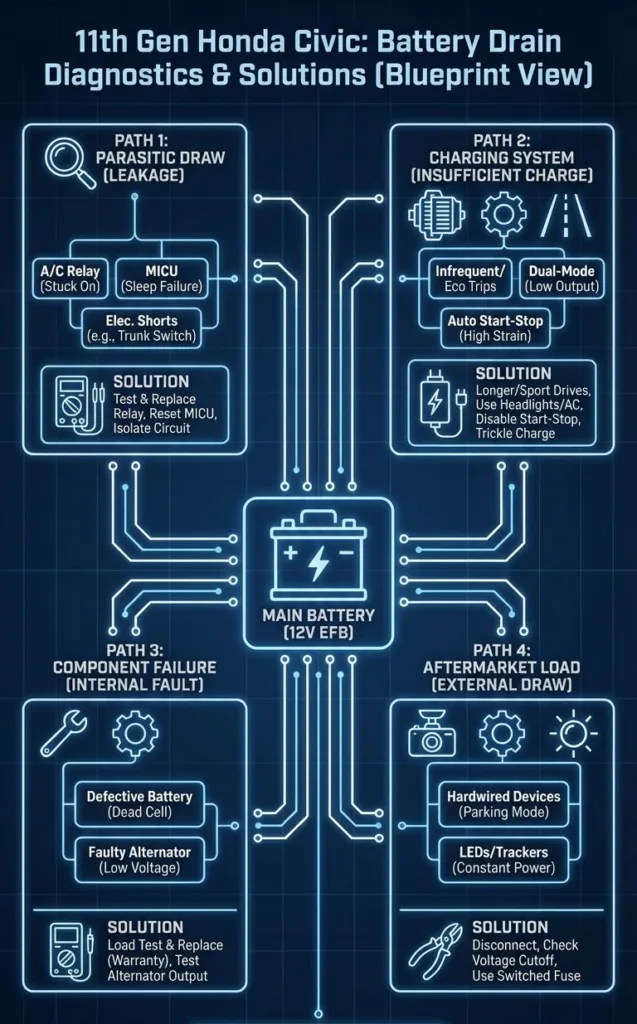
The 11th Gen Civic “Battery Survival Kit”
Until you pinpoint the exact cause of the drain, having the right tools on hand can save you time, money, and the headache of being stranded. Here are three items we recommend for dealing with battery issues:
1. The Emergency Backup: Portable Lithium Jump Starter
Gone are the days of bulky jumper cables and needing a second car. Modern lithium starters are the size of a large power bank but pack enough punch to start your Civic instantly. Keep one charged in your glove compartment for absolute peace of mind.
2. The Preventative Measure: Smart Battery Maintainer
Since the 11th Gen Civic has high electrical demands even when off, a “trickle charger” is the best way to combat drains if you don’t drive long distances daily. A smart charger monitors the battery health and only adds power when needed. This is highly recommended if you work from home or leave the car parked for weekends.
3. The Accessory Saver: Dash Cam Hardwire Kit with Voltage Cutoff
If you determined your parking-mode dash cam is killing your battery, you don’t have to get rid of it. Ensure it is installed using a hardwire kit that features adjustable low-voltage protection. This cuts power to the camera before your car battery gets too low to start the engine.
Disclaimer: This article is for informational purposes based on owner reports and common automotive knowledge. Always consult a certified mechanic or your local Honda dealership for a definitive diagnosis and repair, especially when dealing with vehicle electronics.